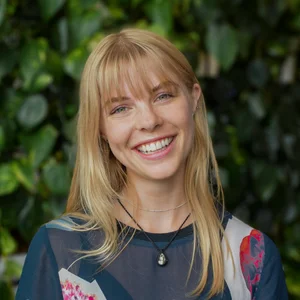
Why now? Why Bondao? A letter from the Founder.
To understand where this all came from, you need to know some of my context.
I’m Luka Love, the firstborn son of a preacher and a nurse. I was raised with fiercely egalitarian values and no financial skills whatsoever. As I grew older, I internalised my mother’s heart for the marginalised and dispossessed, my father’s heart for justice and fair dealings.
I remember vividly dad’s wistful recollections of a time before “greed is good” was the mantra of the 1980s. He spoke of a firm Government hand ensuring fairness in financial markets and of flourishing mutual societies benefitting all members rather than enriching a few. He told me stories about how the concept of insurance started with traders on the Yangtze sharing their loads equally to reduce risk if a boat sank; cooperating for their security not for profit.
As a child I couldn’t understand why the world didn’t still work like that. Life had some lessons in store for me.
I still hold those values of my youth. Dad’s stories – although perhaps apocryphal – left their imprint as moral lessons which can be summed up like this. The institutions of finance perform an essential function in society, but keep a careful eye on them. Finance should always serve its society, and never the other way around.
My adult life has taught me why, and in ways that even now can reduce me to tears to recount them. Stories for another time. Suffice to say for now that I have – over the last twenty years in particular – dealt with my total ignorance on money matters! It’s been a borderline obsession.
Bondao was born out of a need for better tools for retail investors (like myself) to get access to the bond market. Its DNA is encoded for the social good. To produce an institution that serves the people who will use it, and is incapable of inverting that relationship by design.
That emulates nature and succeeds through symbiosis, flourishes only by the people flourishing. It is a pushback against the zeitgeist of extractive capitalism, of zero-sum game economics, of businesses who profit by externalising risk selling pipedreams of overnight millionaires.
What and how and when?
I started work on Bondao in 2021 while I was studying towards my engineering degree. Alongside that I was working full time with a new business that was, although part of a large conglomerate, its own kind of startup. I was actively investing in the stock market and, seeing as I’m getting older, also wanted to put a little into government bonds. That’s when the trouble started.
Bonds. Steady, predictable, boring. Modest returns but relatively low risk as an asset class. And – despite being pretty on to it financially – out of reach. My limited funds to invest weren’t enough to pay the sticker price, and my enquiries with bond brokers about payment plans got me laughed out of the building. If I wanted something I could use, I would have to build it.
It was at that job that I met Marcel, who would eventually come on board to help lay the groundwork for Bondao. Marcel is a gifted tech wunderkind who back then was in perpetual trouble at work for his curiosity. I encouraged him to reconsider University, where we later reconnected as he embarked on a degree in Computer Science. He graduated at the top of his class, won awards and scholarships, and landed a plum job for a prominent Kiwi innovator. Understandably, he won’t be staying with us full time into the next phase of the business but will remain in an advisory capacity for us. I’m super grateful for that. He is a real asset.
In the second half of 2022 I left for a stint at the University of California, Los Angeles. Before I left I reached out to another brilliant friend of mine, Holly. She was working for a Kiwi tech company that was taking major strides in the finance sector as a new market maker. I was seeking her advice about who to look for when building a team around Bondao in California. For a multitude of reasons, it didn’t get off the ground over there and when I returned to NZ I got in touch again about the mission. Holly was in. We now had an award-winning designer and fintech veteran as our Chief Creative Officer.
Others coalesced around us. I approached the folks with the brightest minds and biggest hearts that I know. People with wisdom, who could see the social mission and speak uncomfortable truths when necessary. People that I knew I could trust to help design something that, when push came to shove, would prioritise the needs of the people over selfish ambition. Hayley Rawhiti was one such, with degrees in law, political science, and psychotherapy and a background in education and social outreach. She joined us to advise on the legal, governance, and educational aspects. Bek Lynch, a career compliance consultant, also showed up to help guide us.
We are still growing and evolving as a company but our vision hasn’t changed. To build an exemplar of socially-oriented finance that can sustain itself in service to the people.
Disclaimer: This content is not financial advice. The information above is general only and current at the time it was written. It does not take into account your objectives, financial situation, and individual needs. If you require financial advice, you should consider speaking with a qualified financial adviser, or seek independent advice. Always read the product disclosure documents available from the product issuer before making any financial decision. And remember, investing involves risk.